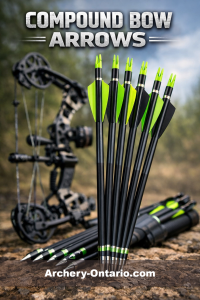
Compound Bow Arrows: 7 Expert Tips for Perfect Accuracy
Choosing the right arrows is one of the most critical—and often overlooked—factors in compound bow performance. Even the most advanced bow cannot compensate for arrows that are poorly matched to your setup. When arrows are selected correctly, accuracy improves, tuning becomes easier, and shooting becomes far more enjoyable.
This guide explains how to choose compound bow arrows based on spine, weight, materials, and tuning. Whether you are a beginner or an experienced archer, these principles will help you achieve consistent and reliable results.
What Makes Compound Bow Arrows Different From Other Arrows
Arrows designed for compound bows must withstand forces that traditional bow arrows do not. Modern compound bows generate extremely high arrow speeds, often exceeding 300 feet per second. This speed places intense stress on the arrow shaft during acceleration and release.
The cam-driven power stroke of a compound bow creates rapid acceleration followed by sustained pressure. Arrows not designed for this energy transfer can flex unpredictably, reducing accuracy and consistency. Purpose-built compound arrows are engineered to handle these forces while maintaining stable flight.
7 Expert Tips for Choosing the Right Compound Bow Arrows
Professional archers follow proven principles when selecting arrows. Applying these guidelines will save time, money, and frustration.
1. Choose the Correct Arrow Spine
Arrow spine determines how much the shaft flexes during the shot. Proper spine selection is essential for straight, consistent arrow flight.
-
Too stiff: Arrows do not flex enough, causing poor clearance and left impacts for right-handed shooters.
-
Too weak: Arrows over-flex and fail to recover, resulting in right impacts and erratic grouping.
Always start with the manufacturer’s spine chart. Match your draw weight and draw length, then fine-tune through testing before buying in bulk.
2. Balance Total Arrow Weight
Arrow weight affects speed, trajectory, penetration, and kinetic energy. The right balance depends on your shooting purpose.
-
Lighter arrows: Faster speed and flatter trajectory, ideal for target shooting.
-
Heavier arrows: Greater momentum and penetration, preferred for hunting.
A general guideline is 6–10 grains of arrow weight per pound of draw weight. For example, a 60-pound bow typically performs well with arrows weighing between 360 and 600 grains.
3. Match Point Weight to Your Goal
Point weight directly influences arrow balance and dynamic spine.
-
Target points: Usually 100 grains, ideal for practice and competition.
-
Broadheads: Commonly 100–125 grains, offering improved penetration for hunting.
Front-of-center (FOC) balance should generally fall between 10% and 15%. Higher FOC improves stability but slightly reduces speed. Always account for point weight when selecting arrow spine.
4. Select the Right Arrow Material
Material choice affects durability, weight, and consistency.
-
Carbon arrows: The most popular choice for compound bows due to their high strength-to-weight ratio and excellent consistency.
-
Aluminum arrows: Affordable and forgiving, suitable for beginners, but heavier and less durable under high-speed stress.
Carbon arrows are the preferred option for most modern compound bows, especially for hunting and competition.
5. Optimize Fletching for Stability
Fletching stabilizes the arrow during flight. Size and configuration should match your application.
-
Short vanes (2 inches or less): Reduced drag and higher speed, ideal for target shooting.
-
Longer vanes (3–4 inches): Increased stabilization, essential when shooting broadheads.
Helical or offset fletching increases spin and stability. Use enough rotation to control the arrow without creating unnecessary drag.
6. Ensure Proper Nock Fit
Nocks must fit your bowstring correctly for consistent release.
-
The arrow should stay on the string when lightly shaken.
-
It should release cleanly with minimal pressure.
Poor nock fit causes inconsistent arrow launch and accuracy issues. Lighted nocks are a useful option for hunters, adding visibility with minimal weight increase.
7. Buy Quality and Test Before Committing
Arrow quality directly affects grouping and consistency.
-
Premium arrows offer tight tolerances for spine, weight, and straightness.
-
Low-cost arrows often vary within the same dozen, making consistent accuracy difficult.
Buy a small test set first. Tune them with your bow and confirm consistent grouping before purchasing larger quantities.
Understanding Compound Bow Arrow Specifications
Knowing how to read arrow specifications helps you compare options confidently.
Arrow Spine Ratings
-
Measured by deflection under a standard load.
-
A 500 spine arrow deflects 0.500 inches.
-
Higher numbers indicate weaker arrows (unless otherwise specified by the manufacturer).
Straightness Tolerance
-
Budget arrows: ~0.006 inches
-
Premium arrows: 0.001 inches or better
Tighter straightness improves accuracy, especially at longer distances.
Weight Consistency
High-quality arrows vary by one grain or less per dozen, ensuring a consistent point of impact.
Tuning Compound Bow Arrows for Best Performance
Even perfectly selected arrows must be tuned.
Paper Tuning
Shoot through paper at close range:
-
Bullet hole = good tune
-
Tail-left or tail-right tears indicate spine or rest issues
Group Tuning
Shoot groups at increasing distances. Tight, repeatable groups confirm proper arrow match.
Broadhead Tuning
Field points and broadheads should impact together. Separation indicates tuning adjustments are needed.
Maintaining Compound Bow Arrows
Pre-Shoot Inspection
-
Check for cracks, bends, and loose components
-
Flex carbon shafts gently and listen for cracking sounds
-
Discard damaged arrows immediately
Proper Storage
-
Store arrows in protective cases or tubes
-
Avoid extreme temperatures and chemicals
-
Keep shafts straight and components secure
Common Compound Bow Arrow Mistakes to Avoid
-
Ignoring spine charts
-
Choosing arrows based on price alone
-
Failing to inspect arrows before shooting
Avoiding these mistakes improves safety, accuracy, and overall performance.
Frequently Asked Questions About Compound Bow Arrows
What spine arrow should I use for a compound bow?
Use the manufacturer’s spine chart based on draw weight and draw length, then fine-tune through testing.
Are carbon arrows better than aluminum for compound bows?
Yes. Carbon arrows offer better strength, consistency, and speed for modern compound bows.
How heavy should arrows be for hunting?
Most hunters prefer arrows between 8–10 grains per pound of draw weight for penetration and energy.
Can I use the same arrows for target shooting and hunting?
You can, but tuning may differ. Broadheads often require additional tuning compared to field points.
Final Thoughts on Choosing Compound Bow Arrows
-
Correct spine selection is the foundation of accuracy
-
Arrow weight should match your shooting purpose
-
Quality arrows deliver consistency and safety
-
Proper tuning maximizes performance
Selecting the right arrows transforms how your compound bow performs. With the right setup, accuracy becomes repeatable—and shooting becomes far more rewarding.
Reference